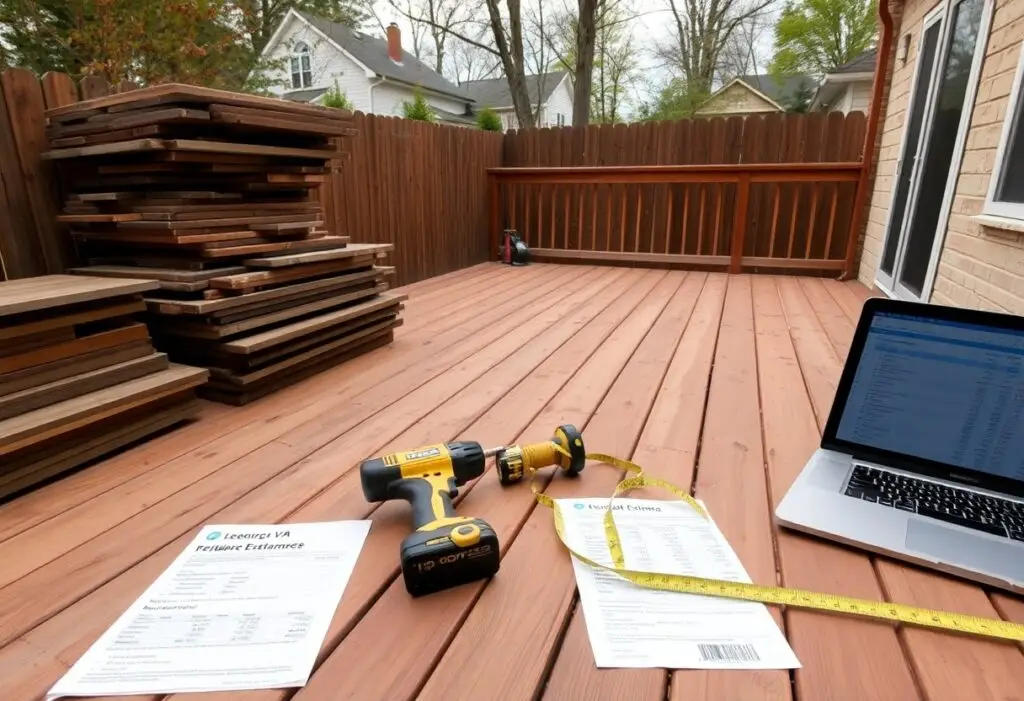
Leesburg homeowners often face unexpected deck repair costs due to the region’s humid summers and freezing winters, which can cause wood to warp or rot. Ignoring small damages can lead to structural hazards, potentially doubling repair expenses. Most repairs range from $200 to $1,200, depending on material, size, and damage level. You’ll need reliable estimates and licensed contractors to protect your investment.
Common Types of Deck Damage in Northern Virginia
- Water damage from frequent rain and humidity
- Rotting wood due to poor drainage or lack of sealing
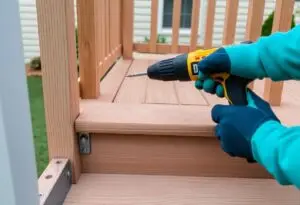
- Loose railings from weather exposure and aging fasteners
- Cracked or splintered boards caused by UV rays and temperature swings
- Structural decay in support posts from ground contact and moisture
After seeing these issues in many Leesburg decks, you’ll want to act fast before small problems become safety risks.
| Damage Type | Average Repair Cost in Leesburg, VA |
|---|---|
| Surface board replacement | $8-$15 per linear foot |
| Joist repair or reinforcement | $200-$600 per joist |
| Railing stabilization or replacement | $150-$400 per section |
| Support post repair | $300-$800 per post |
Structural Decay and Joist Integrity
You can’t ignore sagging or soft spots underfoot-these often signal advanced structural decay in load-bearing joists. When moisture invades untreated wood, it compromises the deck’s ability to support weight. After noticing any give in the frame, schedule an inspection to prevent collapse.
Surface Board Wear and Railing Stability
Worn decking boards develop splinters, cracks, and uneven surfaces that increase slip risks. Loose or wobbly railings fail safety codes and endanger family members. After identifying visible wear, you should prioritize repairs to maintain safe outdoor access.
Constant sun exposure and seasonal freeze-thaw cycles accelerate surface board wear, especially on south-facing decks. Over time, nails loosen and decking warps, creating tripping hazards. Railings, often gripped by hands, weaken when fasteners corrode or wood rots at connection points. After years of weather stress, even well-built decks need reinforcement to meet current safety standards. Addressing these issues early protects your investment and household safety.
Primary Factors Influencing Repair Estimates in Leesburg
- Material selection directly impacts total cost due to availability and durability
- Labor rates in Leesburg reflect local market conditions and contractor experience
- Deck age and structural damage determine the extent of necessary repairs
- Permit requirements can add time and fees to your project
After evaluating these elements, your final quote will reflect the true scope of work needed.
Material Selection and Market Pricing
You’ll find that pressure-treated pine is often the most budget-friendly, while composite and hardwood options cost more due to longevity and low maintenance. Local supplier pricing in Leesburg fluctuates with demand and season. After comparing material performance and cost, your choice shapes both upfront investment and future upkeep.
Labor Requirements and Project Complexity
Complex designs or multi-level decks require more labor hours, increasing overall costs. If your deck has rotten support beams or unstable railings, repairs become more intensive. After assessing access, design, and damage, contractors adjust labor estimates accordingly.
Decks with intricate railings, built-in seating, or hard-to-reach areas demand specialized skills and extra time. If structural components like joists or footings are compromised, full replacement sections may be needed instead of simple fixes. You’re not just paying for time-precision and safety are built into the rate. After the initial inspection, your contractor will outline exactly how complexity affects the final labor cost.
Pros and Cons of Professional vs. DIY Restoration
Choosing between hiring a pro and tackling deck repair yourself shapes the project’s outcome, cost, and safety. While DIY may seem budget-friendly, it often lacks the precision and durability that licensed professionals deliver.
| Factor | Professional Service |
|---|---|
| Cost | Higher upfront expense |
| Time Investment | Completed faster with minimal disruption |
| Quality of Work | Consistent, up to code, long-lasting |
| Skill Required | Expertise guaranteed |
| Warranty | Most contractors offer protection |
| Material Sourcing | Professionals access bulk, high-grade supplies |
| Safety Risks | Minimal for homeowner |
| DIY Learning Curve | None-no need to learn on the job |
| Licensing & Permits | Contractor handles all requirements |
| Error Risk | Low due to experience |
Advantages of Hiring Licensed Local Contractors
You gain peace of mind knowing your deck repair meets local building codes. Licensed contractors in Leesburg carry insurance, reducing your liability, and their familiarity with regional weather challenges ensures materials and methods stand up to Virginia’s humid summers and freeze-thaw cycles.
Evaluating the Risks of Self-Managed Repairs
You might save money initially, but mistakes can lead to costly fixes later. Without proper tools or knowledge, you risk structural flaws that compromise safety-especially on elevated decks where failure could result in serious injury.
Attempting repairs without experience often leads to overlooked damage, like hidden rot or improper joist connections. These issues may not be visible at first but can accelerate deterioration. In Leesburg, where seasonal moisture and temperature swings stress wood, even small errors reduce your deck’s lifespan and could void future insurance claims if an accident occurs due to faulty workmanship.
Step-by-Step Guide to the Deck Restoration Process
Understanding each phase of deck restoration helps you make informed decisions and ensures your project runs smoothly from start to finish.
| Phase | Description |
| Inspection & Permitting | Assess damage and secure required local permits |
| Structural Work | Repair or replace damaged joists, beams, and supports |
| Surface Refinishing | Clean, sand, and apply protective sealant or stain |
| Final Inspection | Verify safety, code compliance, and work quality |
Comprehensive Inspection and Permitting
You begin with a detailed evaluation of your deck’s condition, checking for rot, loose fasteners, and code violations. In Leesburg, VA, any structural changes often require a permit. Skipping this step risks failed inspections or fines, so confirm local requirements early.
Structural Reinforcement and Aesthetic Refinishing
Once permits are secured, damaged support posts, beams, or ledger boards are replaced to ensure long-term safety. After structural integrity is restored, your deck is sanded, stained, and sealed to protect against Virginia’s humid climate and UV exposure.
Reinforcing compromised structural elements prevents dangerous collapses and extends your deck‘s lifespan. Aesthetic refinishing isn’t just cosmetic-high-quality sealants block moisture and deter mold. Together, these steps deliver a safer, more attractive outdoor space that withstands seasonal wear.
Essential Tips for Sustaining Deck Longevity
Regular care keeps your deck strong and safe for years.
- Inspect for rot, loose boards, and rusted fasteners twice a year
- Clean surfaces with a deck cleaner to prevent mold and staining
- Trim nearby vegetation to reduce moisture buildup and pest access
- Address structural damage immediately to avoid costly repairs
The sooner you act, the longer your investment lasts.
Seasonal Maintenance and Cleaning Schedules
Spring and fall are your best times to deep clean and inspect. Wash with a oxygen-based cleaner to lift grime without harming wood. Remove debris from corners and between boards to prevent water retention. The right timing protects your deck from seasonal wear.
Protective Coating and Weatherproofing Strategies
Sealing your deck every 1-2 years blocks moisture and UV damage. Choose a water-repellent sealant with mildew resistance for best results. Apply evenly with a brush or sprayer after cleaning. The protection you add now prevents decay down the line.
A high-quality sealant penetrates deep into wood fibers, creating an invisible barrier against rain, snow, and sun. Stain with built-in sealers offers added color retention and surface defense, especially on southern-exposed decks. Reapplication before peak summer ensures maximum coverage. The long-term savings in repair costs far outweigh the annual effort.
To wrap up
To wrap up, you can expect deck repair costs in Leesburg, VA to range from $250 to $1,500 depending on damage extent and materials used. Routine maintenance saves you money over time, and hiring a licensed local contractor ensures quality work. Your deck’s condition determines whether repairs suffice or replacement is more cost-effective long term.
FAQ
Q: How much does basic deck repair typically cost in Leesburg, VA?
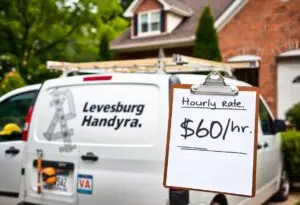
A: Basic deck repairs in Leesburg, VA, such as fixing loose boards, replacing a few damaged planks, or tightening railings, usually range from $200 to $600. The final price depends on the extent of damage, the type of wood or composite material used, and labor rates. Most local contractors charge between $60 and $100 per hour, and smaller jobs often take just a few hours to complete. Homeowners may also need to pay extra if rot or structural issues are discovered during the repair process.
Q: What factors influence the overall cost of deck repair in Leesburg?
A: Several factors affect deck repair costs in Leesburg, including the deck’s size, material type, age, and the severity of damage. Wooden decks often require more frequent maintenance and are prone to rot, insect damage, and warping, which can increase repair expenses. Composite decks resist weathering better but can still suffer from structural issues. Accessibility, permit requirements, and the need for specialized tools or materials also play a role. Labor costs vary by contractor, with experienced pros often charging more but providing longer-lasting results.
Q: When should a homeowner consider replacing a deck instead of repairing it?
A: A homeowner should consider full deck replacement if more than 30% of the structure needs repair, especially if there’s widespread rot, sinking, or instability in support posts or beams. Decks older than 15 to 20 years with consistent maintenance issues may not be worth extensive repairs. Signs like wobbly railings, sagging floors, or nails pulling out indicate deeper structural problems. In such cases, replacement costs between $3,000 and $10,000 may offer better long-term value, safety, and curb appeal compared to repeated fixes.