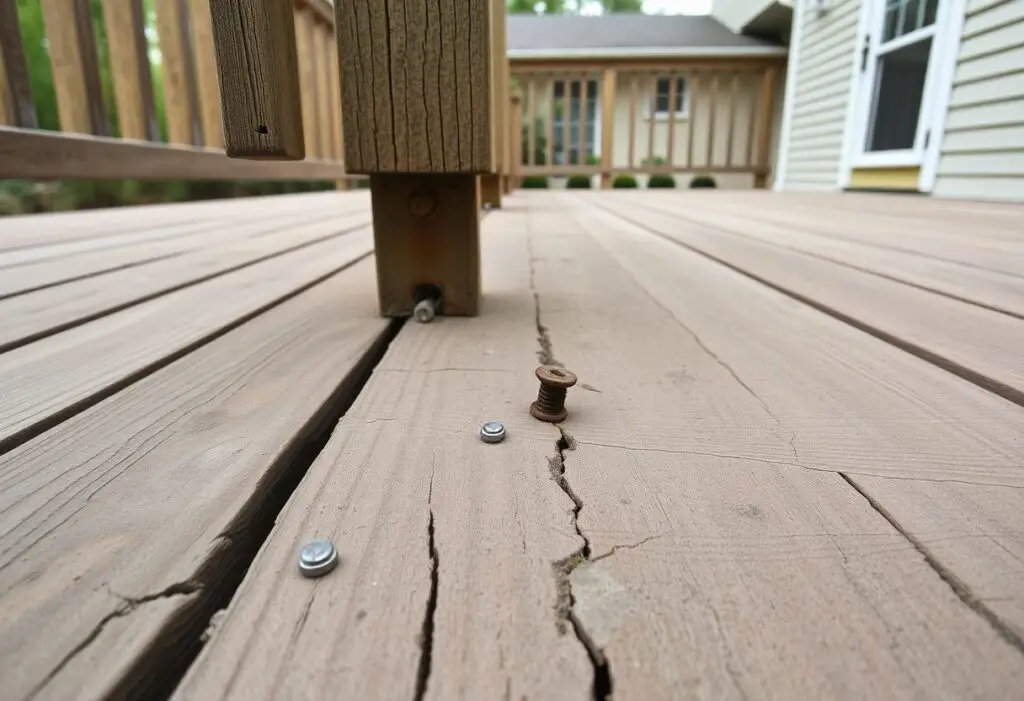
Repairs to your deck’s structure can prevent dangerous collapses and costly damage. If you notice sagging boards, wobbly railings, or soft spots underfoot, your deck may need immediate attention. In Leesburg’s humid climate, wood deteriorates faster-rot and insect damage are common. Early detection saves money and keeps your family safe.
Identifying Common Signs of Wood Rot
Look closely at your deck’s wooden components for discoloration, warping, or a spongy texture-these are early warnings of wood rot. Soft, crumbling wood often signals advanced decay, especially in areas exposed to constant moisture. If you notice a musty odor or visible fungal growth, take action immediately to prevent structural compromise.
Testing for Soft Spots in Support Posts
Probe the base of each support post with a screwdriver or awl. If the tool penetrates easily, you likely have hidden rot that threatens your deck‘s stability. Focus on ground-level contact points, where moisture accumulates and decay spreads fastest.
Inspecting the Ledger Board for Moisture Damage
Check where your deck attaches to the house for water stains, swelling, or peeling paint. A compromised ledger board can lead to catastrophic failure. Look for rusted fasteners or gaps between the board and siding-clear signs of movement or deterioration.
Moisture trapped behind the ledger board is one of the most dangerous issues because it’s often invisible. Water intrusion can rot the house sheathing and weaken the connection that holds your deck to the home. Improper flashing or missing caulk accelerates this damage, making regular inspection imperative for safety. Always verify the board is dry and securely fastened.
Structural Factors Affecting Deck Stability
Your deck’s safety depends on several structural factors that can degrade over time.
- Soil erosion impacts foundation footing stability
- Wood rot compromises joist and beam integrity
- Improper flashing invites moisture near support posts
Recognizing these early signs helps prevent dangerous failures.
Evaluating Foundation Footing Shifts
Uneven settling often signals footing problems beneath your deck. Look for cracks in concrete piers or gaps between the post and footing. Posts leaning at odd angles suggest soil movement or frost heave common in Leesburg’s climate. Recognizing subtle shifts now can prevent major structural failure later.
Assessing Joist and Beam Integrity
Rot or insect damage weakens key load-bearing components over time. Check where beams rest on posts for soft spots or discoloration. Sagging between supports may indicate compromised strength. Recognizing decay early protects your deck’s long-term stability.
Joist and beam systems form the skeleton of your deck, carrying the entire load. When wood fibers begin to separate or feel spongy under pressure, structural failure is imminent. Steel connectors can corrode, and undersized lumber may no longer meet current codes. Inspect every span, especially in shaded or poorly ventilated areas where moisture lingers and decay spreads unseen.
How to Inspect Hardware and Connectors
Regularly checking your deck’s hardware ensures long-term safety and stability. Look closely at all metal components, especially where beams meet posts or ledger boards attach to your home. Weak or damaged connectors can lead to catastrophic failure, so identifying early signs of wear is imperative in Leesburg’s humid climate.
Spotting Corroded or Rusted Fasteners
Examine nails, screws, and joist hangers for reddish-brown flaking or powdery residue-clear signs of rust. Corrosion weakens structural integrity and may indicate moisture trapped in joints. If fasteners appear pitted or swollen, they’re likely compromised and need immediate replacement to maintain deck safety.
Checking for Loose or Missing Bolts
Wiggle each bolt at critical junctions like ledger connections and post bases. Loose or absent bolts drastically reduce load capacity and often go unnoticed until serious movement occurs. Even one missing bolt in a support beam can accelerate stress on surrounding materials, increasing collapse risk.
When inspecting for loose or missing bolts, focus on areas under the most stress-where the deck attaches to your house and at support post anchors. Use a wrench to test tightness; if a bolt turns easily, it’s likely no longer secure. Missing bolts create immediate instability, especially in high-traffic zones, and should be replaced with weather-resistant, code-compliant hardware without delay.
Environmental Factors Specific to Leesburg, VA
- Leesburg’s humid summers accelerate wood decay and fastener corrosion
- Frequent freeze-thaw cycles in winter weaken support foundations
- Heavy seasonal rainfall increases risk of soil erosion under decks
- Dense tree cover traps moisture and promotes mold growth
The combination of moisture, temperature swings, and shaded conditions puts constant stress on deck materials. You face higher risks of hidden structural damage due to these localized conditions. The
Impact of Northern Virginia Humidity on Timber
High summer humidity in Northern Virginia causes wood to absorb moisture and swell, then shrink as it dries. This repeated movement loosens joints and invites rot and fungal growth. You may notice warped boards or soft spots underfoot. The
Managing Soil Erosion Near Deck Supports
Heavy rains wash soil away from deck footings, especially on sloped lots. Without stable ground, posts can shift or sink over time. You must inspect for gaps under support columns or uneven decking. The
Over time, unchecked erosion compromises the integrity of your deck’s foundation. Water pooling near posts can lead to sinking piers or lateral movement, creating dangerous instability. Installing gravel beds, French drains, or retaining stones helps maintain soil density. You should check grade levels annually, particularly after major storms. The
Tips for Maintaining Structural Safety
Regular inspections and proactive care protect your deck’s structural integrity. Watch for soft spots, leaning rails, or rusted fasteners. Keep vegetation away and ensure proper drainage. Clean debris seasonally and address damage immediately.
- Inspect joists and beams annually for rot or insect damage
- Check connections for loose or corroded hardware
- Maintain at least 1 inch of clearance between soil and wood
Any signs of instability mean it’s time to call a professional in Leesburg, VA.
Implementing a Routine Cleaning Schedule
Cleaning your deck twice a year prevents buildup that traps moisture and accelerates decay. Use a mild detergent and soft brush to avoid damaging the wood. Remove leaves, dirt, and debris before winter and after spring storms. Mold and mildew growth can weaken surfaces over time. Any persistent grime calls for deeper treatment.
Applying Protective Sealants and Stains
Sealants shield wood from Leesburg’s humid climate and intense UV exposure. A quality water-repellent sealant slows deterioration and prevents warping. Reapply every two to three years, or sooner if water no longer beads on the surface. Any uneven absorption signals it’s time to reseal.
Protective sealants create a barrier that blocks moisture penetration, the leading cause of wood rot in Northern Virginia’s fluctuating weather. Oil-based sealers penetrate deeper, offering longer protection for high-traffic areas. Stains with UV inhibitors also prevent graying and fiber degradation. Properly sealed decks last years longer and resist insect infestations. Any missed spots during application become weak points-ensure full, even coverage.
Professional Inspection Criteria
A certified inspector examines load-bearing posts, joist connections, and ledger board attachments to ensure they meet safety standards. You’ll want to pay attention if rusted fasteners, cracked wood, or excessive sway are noted-these signal serious structural compromise. Evidence of insect damage or water rot also raises red flags during evaluation.
When to Consult a Structural Specialist
Sagging sections or a noticeable tilt under weight demand immediate expert assessment. If your deck moves when you walk on it or the railing feels unstable, you face a potential safety hazard. Only a licensed structural specialist can confirm integrity and recommend safe repair or replacement options.
Navigating Local Building Code Requirements
Leesburg enforces Virginia Residential Code standards for deck construction, including footing depth, railing height, and material durability. Permits are required for new builds and major repairs, ensuring your deck meets current safety regulations. Skipping inspections risks fines and unsafe conditions.
Local codes in Leesburg mandate that all structural modifications pass inspection by the Loudoun County Department of Building and Development Services. Footings must extend below the frost line-typically 36 inches-to prevent shifting. Guards are required on decks higher than 30 inches, and stair railings must meet specific grip and height standards. Using outdated materials or improper fasteners can cause your project to fail inspection, so always verify compliance before starting work. Your safety and legal liability depend on it.
Final Words
Considering all points, you now know the signs-sagging boards, wobbly railings, rotting wood-that signal your deck in Leesburg, VA, needs structural repairs. Ignoring these warnings risks safety. You can prevent costly fixes by inspecting annually and acting when issues arise. Your deck should support weight and weather without compromise. When in doubt, consult a qualified contractor for a professional assessment.
FAQ
Q: How can I tell if my deck in Leesburg, VA has structural damage?
A: Look for visible signs like sagging or uneven decking boards, wobbly railings, or posts that lean or sink into the ground. Rotting wood, especially at the base of support posts or where wood meets concrete, is a red flag. Soft spots when you press on the deck surface, nails pulling out, or rusted fasteners also suggest structural compromise. In Leesburg’s humid climate, moisture buildup accelerates wood decay, so inspect areas shaded by trees or covered by furniture more closely.
Q: What should I check around the ledger board and why does it matter?
A: The ledger board connects your deck to your house and must be securely fastened to the home’s framing. Check for gaps between the ledger and the house, water stains on the siding, or rusted or missing bolts. If the flashing is damaged or missing, water can seep into your home‘s structure, leading to rot and weakening the connection. In Leesburg, where seasonal rains are common, a failing ledger board can make the entire deck unsafe over time.
Q: When should I call a professional for a deck inspection in Leesburg?
A: Call a licensed contractor or structural inspector if you notice major movement when walking on the deck, visible cracks in concrete footings, or if your deck is over 10 years old and hasn’t been inspected. Older decks may not meet current building codes, especially regarding load capacity and railing height. Local Leesburg regulations require decks to support specific weight standards, and a certified inspector can assess whether repairs or reinforcements are needed to keep your deck safe and compliant.